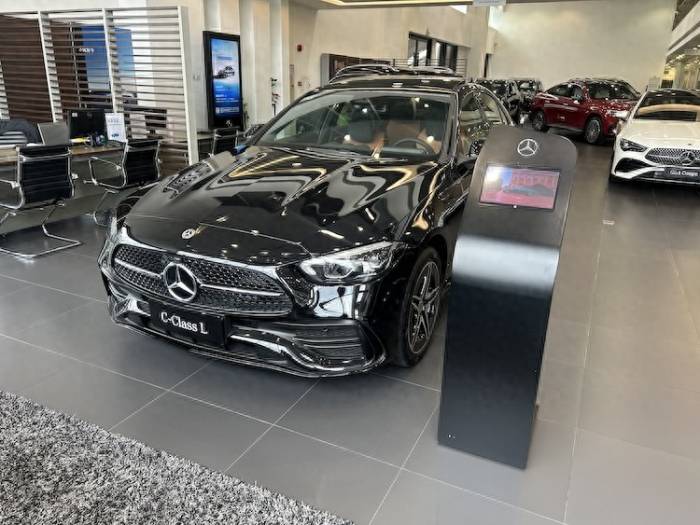
Let's cut to the chase. If you're asking "Will Mercedes be affected by tariffs?", the short answer is a definite yes. But the real question you're probably asking is: how will it affect my wallet, and what should I do about it? The impact isn't a simple blanket price hike. It's a complex web that depends on where you live, which model you want, and even when you plan to service your car. As someone who's tracked the auto industry through multiple trade spats, I've seen buyers make costly mistakes by focusing only on the headline tariff rate. They miss the ripple effects on used car values and repair costs, which can hit just as hard.
What You’ll Find Inside
The Tariff Landscape: It's More Than Just the US
Most people think of tariffs as a US vs. The World issue. That's a mistake. Mercedes-Benz operates a truly global production and sales network. A car sold in Alabama might have engines from Germany, transmissions from Hungary, and batteries from China. This complexity means tariffs can come from multiple directions simultaneously.
Think of it like this: a tariff isn't just a tax on a finished car rolling off the ship. It can hit components. The European Union has its own trade defense measures. China is a massive and growing market for Mercedes. A change in any of these major economic blocs sends shockwaves through their entire system. For instance, the U.S. Trade Representative office periodically reviews Section 232 tariffs on auto imports, while the European Commission has threatened countermeasures. It's a three-dimensional chess game.
Key Insight: The biggest impact often isn't on the cars built for a market, but on the parts shipped into that market for local assembly. A 25% tariff on a $50,000 transmission is a $12,500 cost that must be absorbed or passed on, long before the car hits the showroom.
Scenario Breakdown: US, EU, and China
To understand your personal risk, you need to look at the specific tariff scenario. Here’s a breakdown of how different situations could play out for Mercedes models.
| Potential Tariff Scenario | Most At-Risk Mercedes Models | Likely Consumer Impact | Mercedes' Probable Countermove |
|---|---|---|---|
| Higher US tariffs on EU-built cars (e.g., Section 232 tariffs increase from 2.5% to 25%) | S-Class, G-Class, E-Class Sedan/Wagon, AMG GT, most convertibles/coupes. Essentially, anything built in Sindelfingen, Bremen, or other EU plants and imported to the US. | MSRP increases of 10-20% on affected models. Dealers may add market adjustments on low-supply icons like the G-Wagen. Leases become significantly more expensive. | Accelerate US production of high-volume SUVs (GLE, GLS). Push more buyers toward US-built models. Absorb some cost to protect market share, but not all. |
| EU retaliatory tariffs on US-built cars (In response to US actions) | GLE, GLS, EQC (when US production starts). Models built in Vance, Alabama, for export to Europe. | Higher prices for these SUVs in Europe, making them less competitive against BMW X5 (built in South Carolina) and local European brands. | Shift some European-bound production back to EU plants if feasible, but this is costly and slow. Focus on markets outside the US and EU. |
| Broader US tariffs on Chinese imports (parts & EVs) | Electric models with Chinese-sourced battery cells/packs. Certain electronic components used across the lineup. | Increased cost for EQ models (EQS, EQE). Potential delays if supply chains are disrupted. Makes their EVs less price-competitive against Tesla. | Diversify battery sourcing to other regions (US, EU under IRA). Possibly accelerate plans for US battery cell production. |
See the pattern? It's rarely about the entire brand getting a flat price hike. It's about specific models in specific markets. A customer in Texas shopping for a GLE made in Alabama might feel little direct effect from US-EU tariffs, but their neighbor ordering a German-made E-Class could be in for a nasty surprise.
Direct Impact on You: New Cars, Used Market, Repairs
This is where most articles stop. They talk about MSRP and move on. But the effects are more nuanced and hit in three key areas.
1. The New Car Price Squeeze
Dealers won't just slap a "Tariff Fee" line item on your Monroney sticker. The increase gets baked into the invoice price from Mercedes-Benz to the dealer. Dealers then have to decide how much to pass on to you. On high-demand, low-supply models (think G-Class or certain AMGs), they'll pass on 100% and maybe add more. On volume sellers like the C-Class, they might absorb a portion to keep sales moving. The result is less negotiation room for you. That "$5,000 off MSRP" deal might shrink to $2,000.
2. The Used Car Market Domino Effect
This is the hidden trap. When new car prices jump, demand floods into the used market. Suddenly, a three-year-old E-Class with 30,000 miles looks a lot more attractive than a new one that's $8,000 more expensive. This pushes up used car values. Sounds good if you're selling, right? The catch is, if you're trading in, the dealer will give you more for your trade-in, but they'll also ask for more for the used car you're buying. It often cancels out. For buyers looking solely at used cars, it means less selection and higher prices across the board.
3. Parts and Repair Cost Creep
Nobody thinks about this until they get a repair bill. Tariffs on components mean the cost of replacement parts goes up. A control unit from Germany, a bumper from Poland, a turbocharger from Hungary—all could be subject to new duties. Your extended warranty or insurance might cover it, but premiums will rise over time. For out-of-warranty owners, this is a direct hit. A $3,000 repair could become a $3,600 repair.
I remember a client in 2019 who bought a European-spec classic Mercedes. When certain tariffs kicked in, the cost of importing a specific OEM exhaust manifold doubled. His restoration budget blew up overnight.
Actionable Advice for Buyers and Owners
So what can you actually do? Don't just wait and hope. Be strategic.
If you're buying new soon: Identify where your desired model is built. Use the Mercedes-Benz international website configurators; they often list the plant. If it's EU-built and you're in the US, and tariff talks are heating up, try to lock in a price and order before any announcement. Get the price in writing as part of a purchase agreement, not just a quote. Consider a US-built SUV alternative (GLE, GLS) if price sensitivity is high.
If you're in the market for used: Act before the new-car price shock filters down. Once new prices rise officially, the used market reacts within weeks. Right now might be a good time to buy used if you see stable new car pricing. Look for certified pre-owned (CPO) cars where the price is often more stable than private party sales.
If you're an existing owner: Consider extending your factory warranty if you plan to keep the car long-term. It caps your repair cost risk. Also, understand that your car's residual value (for leasing) or trade-in value might become more volatile. It could swing up (if your model becomes more expensive to import new) or down (if demand shifts to untaxed models).
Non-Consensus View: The common advice is "buy now before tariffs hit." Sometimes, the smarter move is to switch segments temporarily. If tariffs make a German-built E-Class prohibitive, the best value might suddenly be a top-trim Lexus ES or Genesis G80 that's built in a tariff-free location (like the US or Korea). Luxury buyers often have tunnel vision for their brand. Flexibility can save tens of thousands.